Inside This Resource
✔ Understanding the purpose of observation in EYFS
✔ The 3 I's Explained
Intent
Implementation
Impact
✔ Development Matters and Characteristics of Effective Learning
✔ Narrative Observations
✔ Snapshot Observations
✔ Learning Stories
✔ Real Observation Examples Across the EYFS Areas of Learning
✔ Child Voice and Educator Reflection
✔ Planning Meaningful Next Steps
✔ Observation Tracker
✔ Quick Observation Notes
✔ Ready-to-Use Templates and Checklists
Perfect For
🌿 Nursery Practitioners
🌿 Preschool Teachers
🌿 Reception Teachers
🌿 Childminders
🌿 Early Years Students
🌿 Room Leaders
🌿 EYFS Coordinators
Why This Resource Matters
The purpose of observation is to understand and support children's learning—not to create excessive paperwork.
This guide helps practitioners:
✓ Build confidence in observation and assessment
✓ Reduce unnecessary workload
✓ Link learning to the EYFS and Development Matters
✓ Recognise children's strengths and interests
✓ Plan meaningful next steps
✓ Celebrate progress through purposeful observations
Inside This Resource
✔ Understanding the purpose of observation in EYFS
✔ The 3 I's Explained
Intent
Implementation
Impact
✔ Development Matters and Characteristics of Effective Learning
✔ Narrative Observations
✔ Snapshot Observations
✔ Learning Stories
✔ Real Observation Examples Across the EYFS Areas of Learning
✔ Child Voice and Educator Reflection
✔ Planning Meaningful Next Steps
✔ Observation Tracker
✔ Quick Observation Notes
✔ Ready-to-Use Templates and Checklists
Perfect For
🌿 Nursery Practitioners
🌿 Preschool Teachers
🌿 Reception Teachers
🌿 Childminders
🌿 Early Years Students
🌿 Room Leaders
🌿 EYFS Coordinators
Why This Resource Matters
The purpose of observation is to understand and support children's learning—not to create excessive paperwork.
This guide helps practitioners:
✓ Build confidence in observation and assessment
✓ Reduce unnecessary workload
✓ Link learning to the EYFS and Development Matters
✓ Recognise children's strengths and interests
✓ Plan meaningful next steps
✓ Celebrate progress through purposeful observations
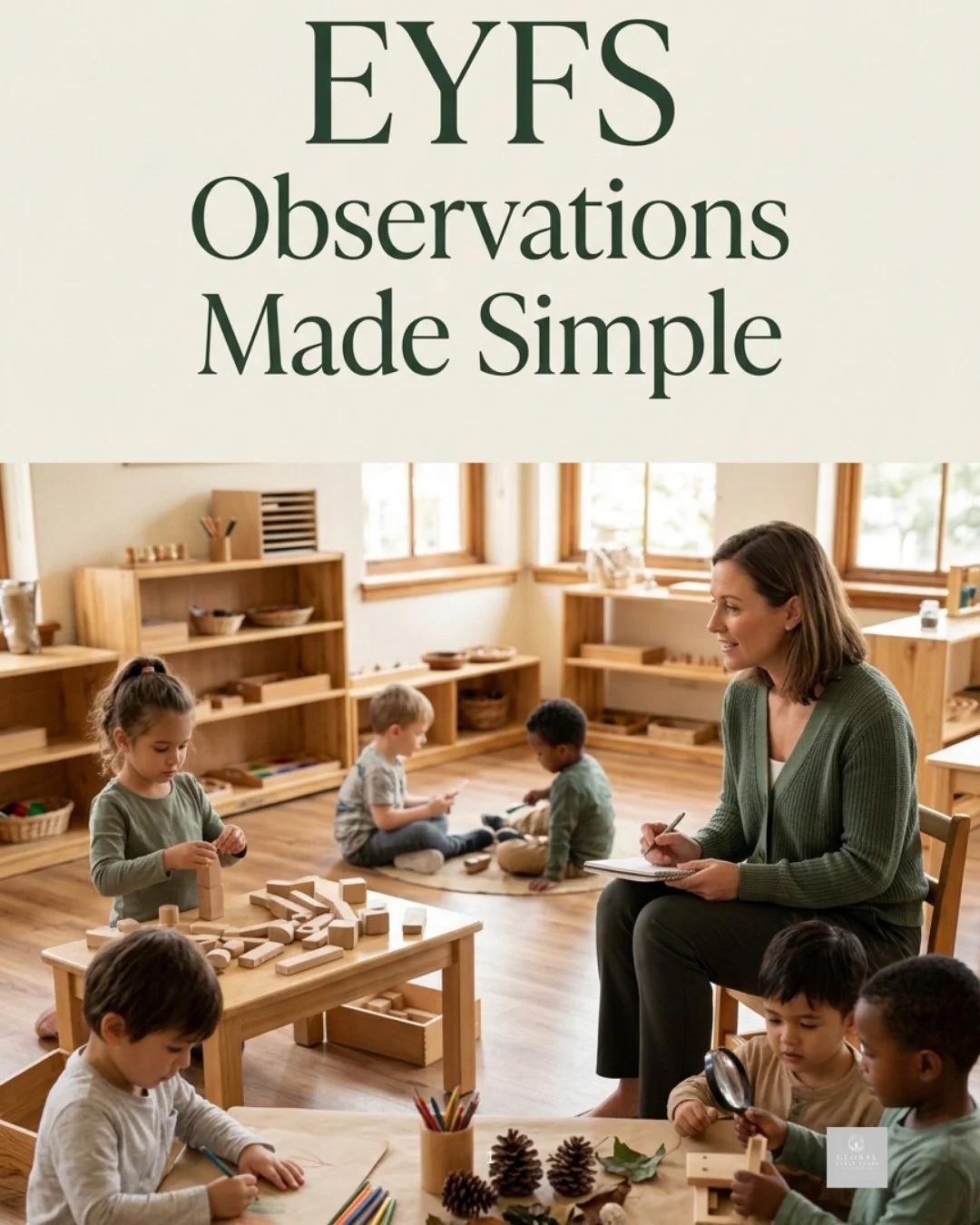 Image 1 of 10
 Image 2 of 10
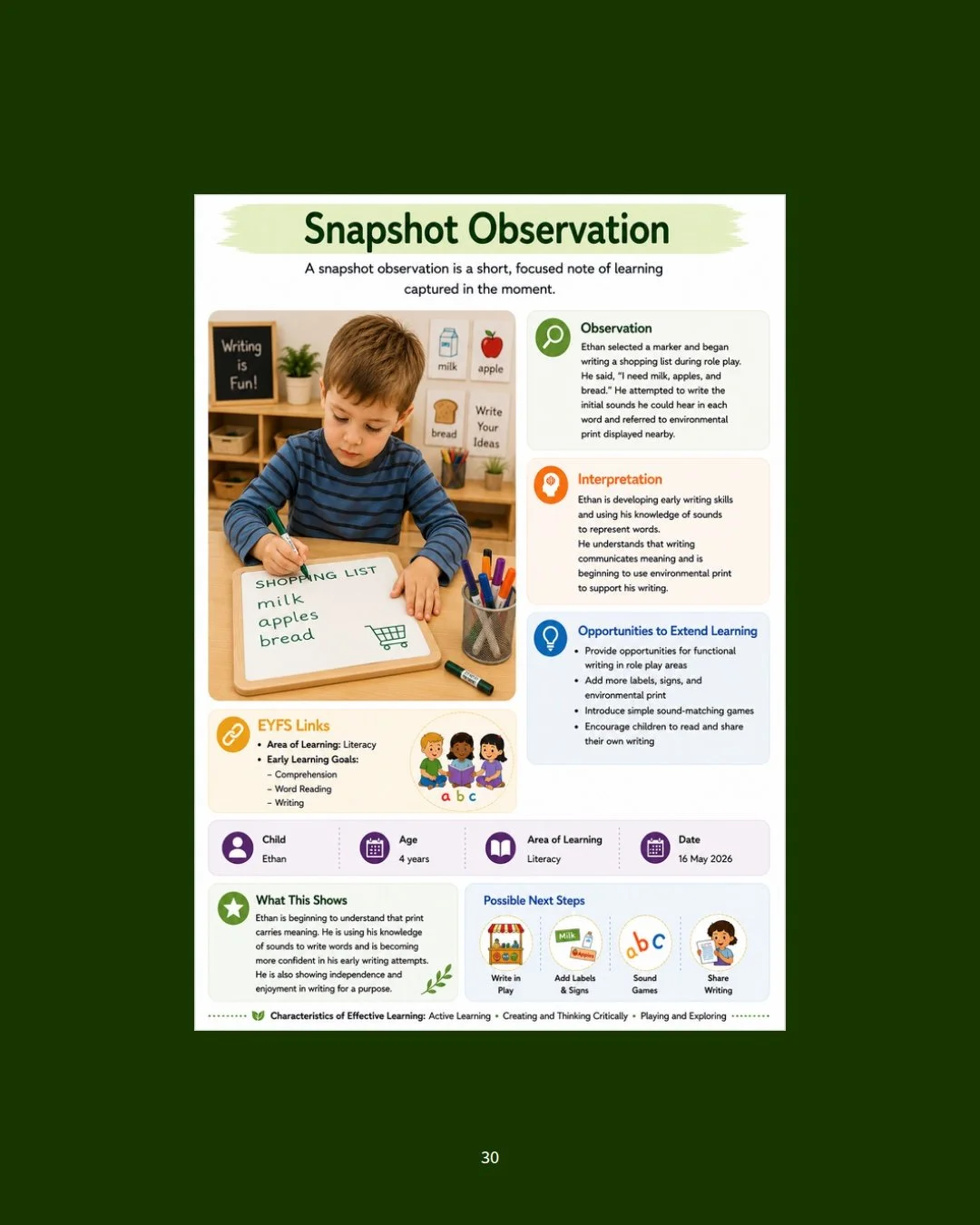 Image 3 of 10
 Image 4 of 10
 Image 5 of 10
 Image 6 of 10
 Image 7 of 10
 Image 8 of 10
 Image 9 of 10
 Image 10 of 10